Sunday, April 23, 2017

New NOCSAE Regulations Aimed at Absorbing Rotational Forces

A few weeks ago, the Kansas City Star reported that the Kansas-City area National Operating Committee on Standards for Athletic Equipment (NOCSAE) will begin to include the measurement of rotational forces in its football helmet standards starting in June of next year. The NOCSAE is a nonprofit that sets testing standards for helmets in various contact sports including football, hockey, and lacrosse. The organization itself does not certify helmets, but helmet manufacturers certify their products to meet the NOCSAE standards. Currently, the NFL, NCAA, and governing bodies for high school sports require that helmets used meet NOCSAE standards, and thus the regulations established by the NOCSAE completely dictate the direction of research and development in new helmet technologies.

Riddell's Air Bladder Design
The design and technology of football helmets has been constantly evolving since football developed into its (somewhat) contemporary form at the beginning of the 20th century. At that time, leather helmets were used by some players, but helmets didn’t become mandatory in college football until 1939 and in the NFL until 1943. In 1940, the John T. Riddell Company was formed in Chicago and developed the first football helmets made of molded plastic shells rather than of leather, and gradually innovations such as the chin strap and the facemask gained popularity as well. In 1970, Riddell filed a US patent for “Energy Absorbing and Sizing Means” for football helmets, which introduced the technology of air bladders in football helmets, a structure which is still used today. Before that point, the interior of football helmets simply consisted of foam padding, similar to what you would find in many contemporary lacrosse or hockey helmets. But with development of air bladders that sit behind this foam padding, which can be inflated or deflated easily using a small pump, helmets could be tailored to form a unique fit for every individual head. Theoretically, a football helmet that fits well is so tight that if someone were to grab a player's facemask and move it side to side, the player’s entire head would move as well, rather than the interior of the helmet brushing about his scalp. Now the padding in football helmets is extremely dense and a truly skin-tight fit is really uncomfortable, so I suspect that many players don’t fit their helmets as tightly as they should, especially at the high school and youth levels.

While I’m sure there’s been an understood relationship between football and head injuries for as long as the game has existed, it’s important to recognize that football’s “concussion crisis” is a relatively new phenomenon. Concussions were rarely talked about 10 years ago, let alone 45 years ago when the development of the air bladder system formulated the technology that is still used in helmets today. And therein lies the problem with contemporary helmets: they’re designed to prevent catastrophic head injuries (ie skull fractures), but don’t actually do much to prevent concussions. Because concussions are internal injuries, where a blow to the head causes the brain, suspended in cerebrospinal fluid, to slosh around and receive axonal damage by bumping into the interior walls of the skull, a hard protective layer around the head doesn’t do a lot to prevent these injuries. Think about an egg. Let’s say you created some sort of hard layer to put an egg in that would protect the shell. If you dropped the egg on the floor, you might prevent the shell from cracking, but you’re not going to be able to prevent the yolk inside of the egg from moving around.

Medical professionals and helmet manufacturers alike recognize this problem. Many months ago, I wrote a post on how every football helmet has a warning sticker on the back of it. Different manufacturers use slightly different language in their warnings, but they all concede that no helmet can prevent brain injuries. This problem is especially true in the case of hits to the head that cause rotational forces, because again, it’s the internal movement of the brain that causes concussions, not necessarily the amount of blunt force applied to an area. Dr. Frank Conidi, a professor of neurology at the Florida State University College of Medicine and director of the Florida Center for Headache and Sports Neurology, stated in 2014 that “biomechanics researchers have long understood that rotational forces, not linear forces, are responsible for serious brain damage including concussion, brain injury complications and brain bleeds.”

Therefore, for all the advancements made in helmet technology in the past few decades, there are really only a couple that I can think of that actually help disperse rotational forces, and they’re both arguably not that significant. The first is that modern helmets are actually rounder than they were in the 1970s and 1980s. As you can see in the picture of Mike Ditka below, helmets used to be more in the shape of an oval, similar to how the human head is shaped.
However, the more spherical two objects are, the less surface area will come in contact between them should they collide. So theoretically, rounder football helmets are safer because direct the surface area of helmet-to-helmet can be diminished a bit, especially if hits are coming at odd angles. The second thing is something I don’t know if I’d call an “innovation,” because it’s been around for decades, and it’s difficult to argue not only whether it’s deliberate or not, but also if it’s even true, especially because I’ve never seen a study confirm or even attempt to confirm this belief. But regardless, some people also believe that the glossy finishes on football helmets reduces friction between helmets that collide, and thus disperses rotational forces more than matte finished helmets would. Whether there’s any veracity in that claim, I’m not sure. But I can see the logic.

But anyway, the question for the future of football helmet technology is what can done to absorb rotational forces. Like I said earlier, theoretically with the air bladder system, the fit of the helmet is so snug that the entire head of a player would move if his facemask would move. And clearly, that might not be the best system for reducing rotational forces. There are currently a couple helmet companies that already have produced helmet models constructed with rotational forced in mind. One is the company Xenith. Their helmets don't use air bladders, and instead fit the helmet with a web system that tightens or expands using the chinstrap, which is connected to the interior structure of the helmet. One of the their models, the Xenith X2, is pictured on the right. The shell of the helmet can rotate independently of the white web that surrounds the player's head, theoretically helping to disperse the rotational forces that impact the head. Xenith helmets certainly aren't the most popular in the NFL, but you'll definitely see them occasionally and their popularity has definitely grown in the past few years. Another company, VICIS, a startup based in Seattle, is also developing a helmet with the idea of dispersing rotational forces. Their helmet design, called ZERO1, also doesn't use an air bladder. The outer layer of their helmet consist of many columns which can both compress and also move laterally, therefore absorbing forces from any angle. More uniquely, the shell of the helmet isn't perfectly rigid like that of other helmets, and instead gives a big to further absorb impact and disperse force. Check out the video below to learn more about the ZERO1. These helmets are still being tested and developed, but it'd be pretty cool to see them at the NFL, NCAA, and high school levels in coming years. Overall, hopefully the new NOCSAE tests will incentivize even more helmet companies to develop technology aimed at absorbing and dispersing rotational forces.


Tuesday, April 11, 2017

Michael Oher Still in Concussion Protocol

As far as the different positions go, offensive tackles certainly don't have the same star power as do positions like quarterback, running back, or middle linebacker. Many committed fans probably couldn't even identify which position on the offensive line that tackles play, let alone name who their favorite teams' starting tackles are. But Michael Oher, left tackle for the Carolina Panthers, is probably one of the most famous offensive linemen in the league, not just for his 8 year NFL career or for his role on the 2013 Baltimore Ravens team that won the Super Bowl, but for the movie The Blind Side, which was a semi-autobiographical account of Oher's experiences growing up in foster care and with periods of homelessness, his eventual adoption by Leigh Anne and Sean Tuohy, and his academic and athletic achievements that enabled him to receive an athletic scholarship to the University of Mississippi. 

However, talk of Oher sort of disappeared early on in the 2016 season, as he played in only the first three games of the season before being ruled out before week four with a concussion. Oher missed the next two months of the season, and was placed on injured reserve on November 25th, 2016. On March 24th of this year, Panthers general manager Dave Gettleman stated that Oher is still in the league's concussion protocol, making it six full months since he was placed in the protocol in week four. On March 30th, the Charlotte Observer reported that Panthers head coach Ron Rivera stated, "I believe he's going to play," referring to getting Oher back in the lineup for the 2017 season.

Even putting all concerns about long-term health aside, I can't imagine why any coach or front office person would keep a player on their roster that has been in concussion protocol for six months. Obviously every brain injury is unique and it's impossible to predict someone's path of recovery or long-term prognosis, but if a player has been unable to pass concussion protocol (which consists of neuropsychological evaluation which tests cognitive and balance functions, and then moves to a graduated increase of physical activity from light aerobic activities, to football-specific workouts, to non-contact drills, to full-contact practice) for six months, the chances that he's all-of-a-sudden going to get healthy in time for next season, and, more importantly, that he'll stay healthy throughout the following year, is extremely unlikely. And what baffles me the most is that this situation happens way more often than it should, where a good player enters concussion protocol for a prolonged period time (like months), but then returns the following year only to eventually re-enter the concussion protocol once again. This exact situation happened with Steelers tight end Ladarius Green, who I wrote an article about in December. You'd think that NFL teams would stop taking chances on these guys given the risks involved. And again, here I'm only talking about the financial and logistical risks of signing a player who might not be able to play in every game, not the larger question of whether a player with a history of concussions should at some point be blacklisted (either formally or informally) from being signed by teams in the future.

Answering that bigger question is a bit tougher, and it depends on a lot of different variables at play. In the case of Oher, I don't think it could be more obvious that he should hang up the cleats. I mean, the guy is 30 years old, he's been in the NFL for eight years, he's a multimillionaire, he's a Super Bowl champion, he had a movie made about his life that was nominated for an Academy Award. What else does he need to prove? A player who is 23, has only been in the NFL for one year and is still trying to make a name for himself and make enough money where the past 8+ years he's invested in football might seem financially worthwhile, maybe I could see his reasoning for wanting to keep trying to get healthy and play another year (of course, I certainly would certainly advise him against it, but I'm just saying I understand his argument). But it makes no sense for Oher to stick around or for the Panthers to take a chance on him by keeping him for the 2017 season, because he's already had a long career, and he's at the age where he's deteriorating as a player anyway, concussion issues or not.


Now, I don't think it would be right for the NFL to ever literally force a player to retire over concussion issues, for a few reasons. One, there's a 100% injury rate in the game of football. It's unfortunate, but it's a reality that players obviously understand and experience every year. And more recently, I think an increasing amount of players also understand the symptoms of concussions and the risks of concussions on long-term health. But another important thing to consider is that if the NFL were to ever force players to retire due to concussions, it would strongly discourage players from reporting concussions to medical staff and/or teams from reporting concussions to the media out of fear of a player's career being cut short (the irony here should be pretty obvious).

I think a good solution might be a shift in the perception of signing or resigning players with a known history of prolonged concussion symptoms. To discuss Ladarius Green again, I guarantee the Steelers organization knew about the concussion history he had with the Chargers when they decided to sign him as a free agent. In fact, they probably discussed it at length before making a decision on his contract. But they decided that it wasn't significant enough to avoid signing him, even though he was healthy for only six games in the 2016 season. A big shift should come from the media as well. I mean, there's many different non-directly-football-related reasons that teams choose not to sign players, and much of this reasoning comes due to perceived media reaction. For example, most teams avoid signing players with histories of off-the-field incidents such as DUIs, assault charges, domestic violence, among other things. While I'd like to think that the decision to not sign these players is because NFL teams care about having players with high standards of conduct, a large incentive for these decisions more likely comes from the perceived impact it will have on a team's PR. You would think that if the media viewed signing a player with a history of concussions as a negative action by NFL teams, and if situations like what happened with Green or what is currently happening with Oher received more media scrutiny, they'd be less likely to do it.

Thursday, March 30, 2017

NFL Announces Rule Changes for 2017 Season

This past week, the NFL Competition Committee announced many significant rule changes to be implemented in the 2017 NFL season. Among these were several designed to increase player safety by, as Falcons President and Competition Committee chairman Rich McKay described, avoiding putting "players in a position in which we think there is an unreasonable risk of injury." Although official language of the new rules hasn't been written yet, the NFL released a rundown of the approved proposals on Tuesday. Among these rule changes that center around player safety are a rule that prohibits jumping over the line to block a field goal or extra point attempt, a rule that gives all receivers running a passing route "defenseless player" protections, a rule that bans crack blocks by a player who is in motion, and a rule that ejects a player who receives two certain types of unsportsmanlike conduct penalties in one game.

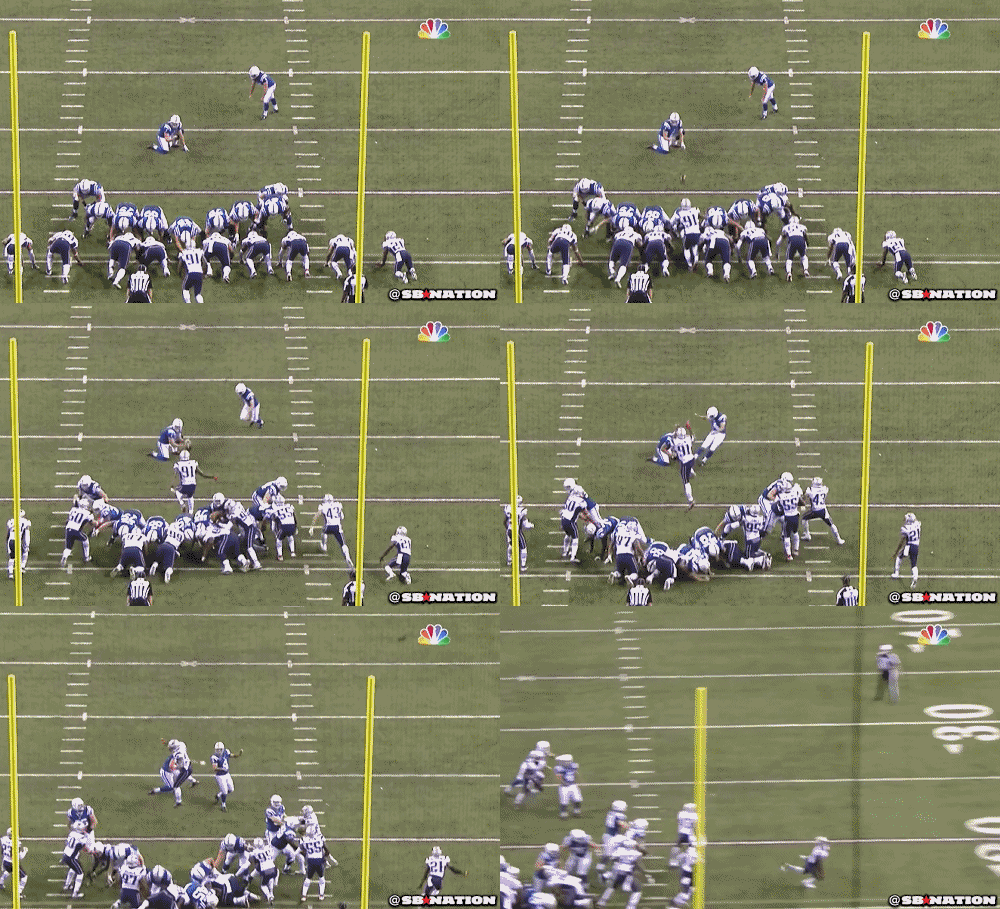
In terms of reaction from the media and the public, the most controversial rule change is likely the ban of leaping over the line to block a kick. This difficult play has become extremely popular in the past couple seasons, and when executed well has brought an exciting element to an otherwise often forgettable part of games. If you watch the clip below and see Patriots linebacker Jamie Collins (91) jump over the snapper, it seems like a fairly safe play for all involved.
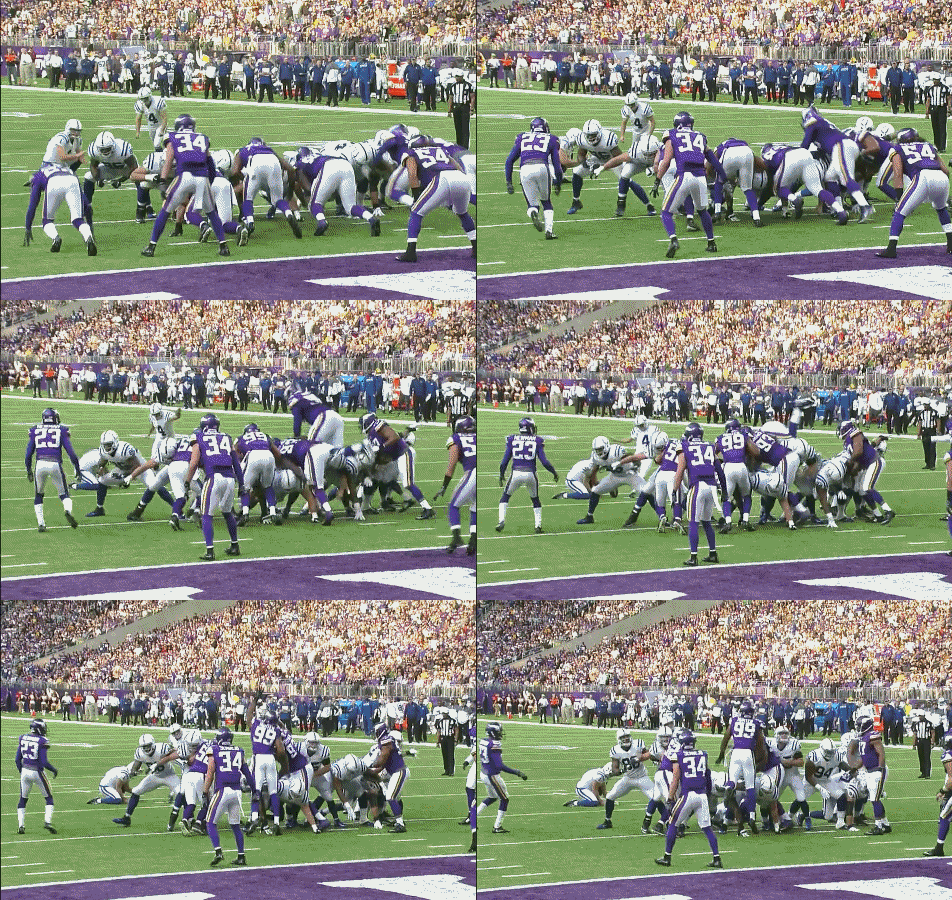
However, when a less athletic player, like Vikings defensive tackle Linval Joseph (98) tries to jump over the line, he puts all his weight onto the guard, who has his head and arms down and is therefore unable to protect himself from a player coming over the top. Joseph also puts himself at risk of falling on his head or neck when his legs come out from under him.
Prohibiting leaping over the line to block a kick may seem excessive, but it prevents defenseless linemen from being fallen on and prevents leapers from falling at dangerous angles. Besides, the majority of kicks are blocked by players shooting an outside gap or someone in the middle getting his arms in the air anyway, not by jumping over the line, so it's not like field goal blocks are being removed from the game entirely.

Speaking of defenseless players, another approved rule change is that all receivers who are running passing routes are now considered to be defenseless. What constitutes a "defenseless" player is subjective and often disputed, but in simple terms it's generally an offensive player who is making a certain type of motion that by its nature would prevent him from protecting himself from defenders. Some common examples would be a quarterback who is in the the motion of throwing a pass, or a receiver who is attempting to catch a pass. Because these players are unable to brace themselves for a collision or even see a hit coming, there are restrictions on where defenders are permitted to hit them; in the receiver example, the defenseless player can only be hit below the neck, and in the quarterback example, the passer can only be hit between the shoulders and thighs. Deeming all receivers who are running passing routes, even those who aren't thrown to, as being defenseless might seem extreme, but I think it's a good change that protects vicious contact that is often unseen because it happens away from the ball. In the NFL, defensive players are allowed to make contact with receivers who are running routes so long as the contact occurs within five yards of the line of scrimmage. This rule will remain; the only difference is that now, the contact put on receivers can't be to the head or neck areas.

"Defenseless" players are not always on offense. Under NFL rules, defenders who are the recipients of crack blocks are also considered defenseless, and contact put on by receivers can't occur above the shoulders or below the waist. A crack block is a block where an outside receiver runs inside and blocks a defender who would normally be head-up over the inside receiver. In the diagram on the right, you can see the X receiver is lined up on the cornerback to start the play, and the Z receiver is presumably being watched by the outside linebacker who is between the left tackle and left guard. On a normal run to the outside, X would block the corner and Z would block the linebacker; however, on a crack block, the two receivers switch assignments. The corner will see the change coming as he sees the X receiver run in instead of towards him, but the linebacker, who is focusing on the Z receiver, won't even see X before X puts him on the ground. With the new rule change, the play on this diagram would still be legal. However, receivers are no longer to crack block if they are in motion and coming from the backfield. Now, receivers can't get a running start to crack blocks before the ball is snapped, therefore reducing the force involved in crack blocks and making it easier for defenders to track where blocks may be coming from.

One last rule approved by the Competition Committee is actually one that has been in place for the last year on a temporary basis, but now is considered permanent: a player who is penalized twice in the same game for certain types of unsportsmanlike conduct is now automatically disqualified from play. In the past, some people have called this rule the "Odell Beckham Rule," after Giants receiver Odell Beckham Jr received three personal fouls in a 2015 matchup against the Panthers yet was not ejected (he was later suspended for one game). Examples of unsportsmanlike conduct often include intentional helmet-to-helmet conduct, such as in the case of Beckham, and can also include things like punches or kicks.

The complete list of approved 2017 rule changes can be found here:
https://nflcommunications.com/Documents/2017%20Offseason/Approved%202017%20Playing%20Rules%20Proposals.pdf

Saturday, March 25, 2017

Lance Briggs Featured in Video Campaign About CTE

Since the days of Dick Butkus in the late 1960s, to Mike Singletary in the 1980s, to Brian Urlacher in the 2000s, the Chicago Bears' linebackers have been always been known for their hard-nosed and physical style of play. In recent years, this identity was embodied by Lance Briggs, who played his entire 12 seasons in the NFL with the Bears from 2003-2015.


Briggs is now working on a video campaign with Sqor Sports, where he describes his experiences as a professional football player and his concern over CTE. In the first video, available on Sqor's website, he stated “I get concerned for myself. And even though I’ve never had any suicidal thoughts or anything like that, for it to happen to some great men and great football players, I know that I can’t separate myself from that crowd.”

Although CTE can currently only be officially diagnosed postmortem, many prominent players have in recent years publicly acknowledged their struggles with CTE-like symptoms and/or their concerns with what impact it may have on their lives in the future. Among these are Bo Jackson, who stated that he "would never have played football" had he known the risks of repetitive head trauma, in addition to Hall-of-Famers Brett Favre, Tony Dorsett, and Harry Carson.

Briggs' video campaign is obviously important for spreading awareness about CTE to fans of the game who may not understand what CTE is or even that it exists. Another group of individuals I hope it impacts, though, is former NFL players who may be experiencing CTE-like symptoms but are hesitant to recognize or acknowledge them. It's an unfortunate reality, but the more research about CTE that is done, the more it begins to seem like an occupational disease of playing football professionally. That's not to say that every NFL player will get CTE, and there is a sample bias within CTE research in that the brains that are studied are most often from players whose families noticed possible symptoms in them. But just like many NFL players expect to get arthritis as they get older, expect to deal with back problems, etc, they too should expect to experience some form of neurological or mental disorders.

It's heartbreaking to hear about former players, some of whom are only in their late 30s or early 40s, stating publicly their struggles with dementia, impulsiveness, depression, and other symptoms that can arise from CTE, but it's arguably even sadder to hear about people like former Chargers linebacker Junior Seau, who committed suicide back in 2012, who along with his family had to endure CTE symptoms without knowing their exact cause. In an interview with Frontline, Seau's daughter, Sydney, described how Seau grew more emotionally distant, forgetful, and had bouts of rage in the later years of his life. Yet she also stated, "obviously I never thought of a disease in this equation." Some people speculate that Seau was indeed aware of his condition, at least somewhat, because he shot himself in the chest rather than the brain. However, he left no instructions regarding a desire to have his brain medically examined. In either case, had Seau's family been aware of his infliction, or at least of its possibility, they'd have been able to take more precautionary measures and help Seau get the medical care that would help him manage his symptoms and live a quality life. Lance Briggs, for example, stressed the importance of staying mentally and physically active after football, and described his attempts to stay busy and engaged in the community. Hopefully with Briggs' example, more former players will actively monitor their well being and seek help from families and friends in their lives after football.

Saturday, March 11, 2017

Dr. Bennet Omalu, Mike Webster, and the Discovery of CTE

If you were to see Mike Webster in the late 90s, sleeping at a train station or living out of his car, you'd probably never think that he played 17 seasons in the NFL, was a four-time Super Bowl champion, was a member of the Pro Football Hall of Fame. Webster was living like a vagabond, engulfed in financial debt, depression, dementia, and severe joint and muscle pain from years of anchoring the Pittsburgh Steelers' "Iron Curtain" offensive line. Of all people, Dr. Bennet Omalu certainly wouldn't recognize Webster; Omalu, who was born and raised in Nigeria, had little knowledge of or interest in football before one morning in September of 2002.

Dr. Bennet Omalu
Dr. Omalu was a physician and forensic pathologist, working at the Allegheny County Coroner's Office in Pittsburgh. While arriving at work one morning, he was surprised to find TV news vans outside and commotion around the office. He asked what was going on, and one of the technicians reported that Mike Webster had passed away. When Dr. Omalu reponsed that he didn't know who Webster wars, his Pittsburgh coworkers looked at him with shock. Webster, who passed away at 50, was only 15 years earlier the most dominant center in the NFL, and one of the most well-known people in the city.

Dr. Omalu reviewed Webster's case file. Webster, who had died in a hospital from a heart attack, had already had his death certificate signed by a physician. Normally, Dr. Omalu would not have to perform an autopsy under these circumstances. However, a physicain had also listed "Post-concussion syndrome" as a contributory factor in Webster's death. Since post-concussion syndrome is a traumatic disease, and therefore categorized as an accidental manner of death, Webster's death also fell under the jurisdiction of the medical examiner.

As Dr. Omalu became aware of Webster's recent history of depression, erratic behavior, amnesia, and dementia, he started to think that Webster may have been inflicted with Alzheimer's disease. However, although his behavior matched common signs of the disease, Webster's brain showed no physical signs of Alzheimers. Confused and intrigued, Webster took samples of the brain to study, and also sent samples to the University of Pittsburgh brain lab. When the tissues returned from the brain lab, Dr. Omalu noticed abnormal proteins in the brain and neurofibrillary tangles that were similar yet distinct from what we normally be seen in a patient with Alzheimer's disease.

For the next few months, Dr. Omalu combed through numerous scientific papers, looking for writings about brains similar to Webster's. In an interview with Frontline, he described: "In the literature, everybody was giving it descriptive names, like nobody gave it generic names. Nobody had the, I could say the courage to give it a specific disease, identify it as a specific disease entity, describe the pathology." Omalu decided to give this pathogenic concept a name, calling it "Chronic Traumatic Encephalopathy," or CTE: chronic" meaning the disease is long term, "traumatic" meaning caused by physical injury, and "encephalopathy" meaning abnormal brain function or brain disease.
Mike Webster (52)

For the next several years, Dr. Omalu, along with colleagues at the University of Pittsburgh, continued to study Webster's brain. In July 2005, a little under three years after Webster's death, they published "Chronic traumatic encephalopathy in a National Football League player" in in the medical journal Neurosurgery. Dr. Omalu recollected with Frontline: "I was excited. I thought the football industry would be happy with our new discovery. I thought naively that discovery of new information, unraveling new information, redefining concepts, I thought the football industry would...turn it into some type of utility, some type of utility function to enhance the game." However, his studies were met with strong backlash by the NFL. He was a young, virtually unknown physician from Nigeria perceived to be be attacking the American way of life, and NFL doctors sent him letters demanding his paper be retracted. Dr. Omalu was worried about the very future of his career. However, after former Steelers guard Terry Long, who had been a teammate of Mike Webster, committed suicide in 2005, Dr. Omalu had the chance to study Long's brain as well. He also spoke with Long's wife, who stated that Terry Long had exhibited many of the same mental symptoms as did Webster. After finding the same neurological damage in Long's brain as he'd seen in Webster's, Omalu doubled down a published another paper as a follow up to the first.

Dr. Omalu's discoveries generated a cascade of scientific research, media coverage, reactions from the NFL, and public attention that have revolutionized the way people look at football and concussions in the past decade and a half. His discoveries gained even more national attention a couple years ago with the movie Concussion, which stars Will Smith as Dr. Omalu and tells a narrative strongly based on Omalu's real experiences studying CTE and fighting against backlash from the NFL. Overall, the discovery of CTE is so significant because it reveals that concussions not only cause brain damage in the acute sense, but that repetitive brain trauma occurring over a long period of time can lead to dementia, depression, and other symptoms later in life. In addition to former football players, CTE has also been identified in combat veterans, and professional athletes of various other sports such as hockey, wrestling, and boxing, among others.

Wednesday, February 15, 2017

Second-impact Syndrome and its Implications

During the 2015 high school football season in the United States, fourteen players died playing football or participating in football-related activities. Of these deaths, seven were categorized as what the National Center for Catastrophic Sports Injury Research, a part of the University of North Carolina, deems "direct fatalities:" deaths occurring by fatal injuries sustained during competition. The other seven deaths were categorized as "indirect fatalities," occurring during practice or conditioning but not the direct result of collisions, such as a heart attack or heat stroke. Within the direct fatalities, five were fatal head injuries, one was a broken neck, and one was a ruptured spleen.

Fortunately, deaths at the college and professional levels of football are extremely rare. In fact, only one player has ever died on field during an NFL game, Lions receiver Chuck Hughes, who suffered a heart attack on October 24th, 1971. However, there are only about 1,700 active players on NFL rosters each year, compared to what the NCAA projects to be about 73,000 NCAA players, and 1.1 million high school players. Factor in youth football, non-NCAA college teams (such as community colleges or club teams), and semiprofessional leagues, and there are millions of football players each year in the United States alone. 

Due to the small sample size of players and injuries in the NFL, catastrophic brain injuries, such as those caused by second-impact syndrome, aren't often discussed by the media or understood by people involved in or fans of the sport. By this point, pretty much everyone following football in any capacity knows the signs and long-term risks of concussion, or at least that they exist, but few know about second-impact syndrome. A couple weeks ago, I wrote about Patriots receiver Julian Edelman, who possibly played through a concussion in Super Bowl XLIX against the Seahawks in 2015. Edelman didn't miss a snap for the rest of the game after getting hit, and ended up catching the game-winning touchdown. He was praised by some media outlets for his toughness. By the reality is that, if he was concussed, he was literally one hit away from a possible death. I mean, that's kind of true in football (and a lot of things in life) all the time anyway, but sustaining a second concussion before the first one has healed can lead to rapid swelling of the brain, leading to a mortality rate of around 50%, and a near 100% chance of permanent disability, such as paralysis and/or coma. 

During a concussion, the brain, normally suspended in and protected by cerebrospinal fluid, makes contact with the skull, causing shearing forces which damage axonal tissue. This bruising leads to chemical imbalances as the brain attempts to repair itself.1  If the brain receives a second blow before recovering from the first, these imbalances prevent the brain from regulating intracranial pressure and blood flow. Cerebral edema, the excess accumulation of fluid in the brain, leads to brain herniation, or rapid swelling; the brain essentially continues to expand, but is physically constrained by the limits of the skull, and death can occur within minutes.2

It goes without saying that in football, there's a culture of playing through injuries. But, learning about second-impact syndrome will ideally encourage players to report concussions to medical staff. In 2014, a survey of 730 NCAA football players by Harvard and Boston University revealed that for every concussion officially diagnosed, there were many other instances of suspected concussions or concussion-like symptoms that players chose not to report to medical staff. Even ignoring the long-term health concerns associated with concussions, hopefully increased awareness of the rare but often fatal condition of second-impact syndrome will incentivize players to remove themselves from games or practices when experiencing concussion symptoms, and, just as importantly, not return to play until all symptoms have dissipated.


1 http://www.brainfacts.org/about-neuroscience/ask-an-expert/articles/2015/what-happens-in-the-brain-during-and-after-a-concussion/
2 https://www.ncbi.nlm.nih.gov/pmc/articles/PMC2672291/

Friday, February 10, 2017

What the Big Stories will be this NFL Offseason

More than arguably any other American sports league, the NFL has a grip on the national audience that lasts year round. Sure, it takes a back seat to the NBA and NHL in the spring, and the MLB in the early summer. Still, though, every day throughout the NFL offseason, you can find analysts and pundits on every form of media making bold predictions for the upcoming season, reporting on events within the league, or just generating interesting headlines out of nothing. At its core, though, the NFL offseason is about personnel. Especially in a league where teams start with 90 players at the beginning of training camp (which is whittled down to 53 players on the active roster by opening day), there's always buzz about who over/underperformed in the combine, what draft picks are going to different teams, and which veteran players may be traded, cut, or signed to new contracts.

In the past few years however, the biggest stories haven't just been about free-agent signings, but instead about young players deciding to leave the game early. Indeed, it seems like every year more and more NFL players are retiring "early" due to concern about the long term effects of head trauma, concern with other injuries, general disinterest in the game, or some combination of all three and/or other factors.

Now, it's hard to really define what retiring "early" is in the NFL, for many reasons. Primarily, according to the NFL Player's Association, the average career is only 3 1/2 years long, meaning that a player retiring at age 26 would technically be around retirement age, even though he might still have a lot left in the tank physically. Additionally, different positions have different expected career lengths due to disparities in the physical demands and levels of contact. A running back who is 29 would be considered pretty old by NFL standards, and yet many quarterbacks and kickers player into their late 30s. Tom Brady, for example, was named MVP of Super Bowl LI last Sunday at age 39, and hopes to keep playing for several more years.

Regardless of the subjective nature of what is "early," though, I think it's pretty commonly agreed upon that the vast majority of professional athletes play until they either A. get cut from a team or B. physically can't play anymore. So, for argument's sake, I consider someone who retired early to not fall under one of those two categories.

Around the start of this blog, I wrote an article about Chris Borland, a former all-American linebacker at Wisconsin who started for the 49ers as a rookie, who walked away from the NFL in 2015 after only one year, choosing to forgo millions of dollars and what would likely be a long, successful career due to concerns over football and TBI. Earlier today, Bengals linebacker Trevor Roach, age 24, announced his retirement from the league. Now, the Bengals organization officially stated that Roach had lost simply lost interest in the game, and I'm not saying that he retired for the same reasons as did Chris Borland. But in addition to citing a dwindling interest in the game, lost time with family, and desire to start a new career, Roach also commented to media, "I've seen guys play for 10 years and have their bodies beat up and I didn't want to do that."

Calvin Johnson
Now it's one thing for younger, emerging players to leave the sport when less of their life has been built around it, and their legacy within it is not as strong. It was and is quite another when one of the best players in the entire NFL decides to retire while still in great shape and at the top of his game. But that's exactly was Lions receiver Calvin Johnson did last offseason after nine years in the league. Now, nine years is a long NFL career compared to the average. But in that nine year span, no player had more receiving yard or receiving touchdowns than did Johnson. In fact, he set the NFL single-season record with 1,964 receiving yards in 2012. Still a borderline hall of fame candidate now, most agree that he would have been in the discussion for the greatest NFL receiver of all time had he played around five more years and put up decent numbers. Yet he retired at age 30, citing concerns over his long-term health. Now, he didn't point to head injuries specifically as the cause for his decision, but they were certainly a factor; he said in an interview, "I don't know how many [concussions] I've had over my career, you know, but I've definitely had my fair share." Johnson's statement is especially concerning because he never was listed with a concussion on an NFL injury report in any of his 9 seasons, which calls into question the reports' integrity (I've discussed this topic in a previous post on De'Anthony Thomas).


So, anyway, this offseason we'll obviously see a handful of big name players retire after long careers and years of wear-and-tear on their bodies. But what I think the more interesting stories will be, and I'm certain that there will be a few of them, are the younger guys who will follow the precedent set in the past few offseason of players retiring early in order to look out for their long-term health.